
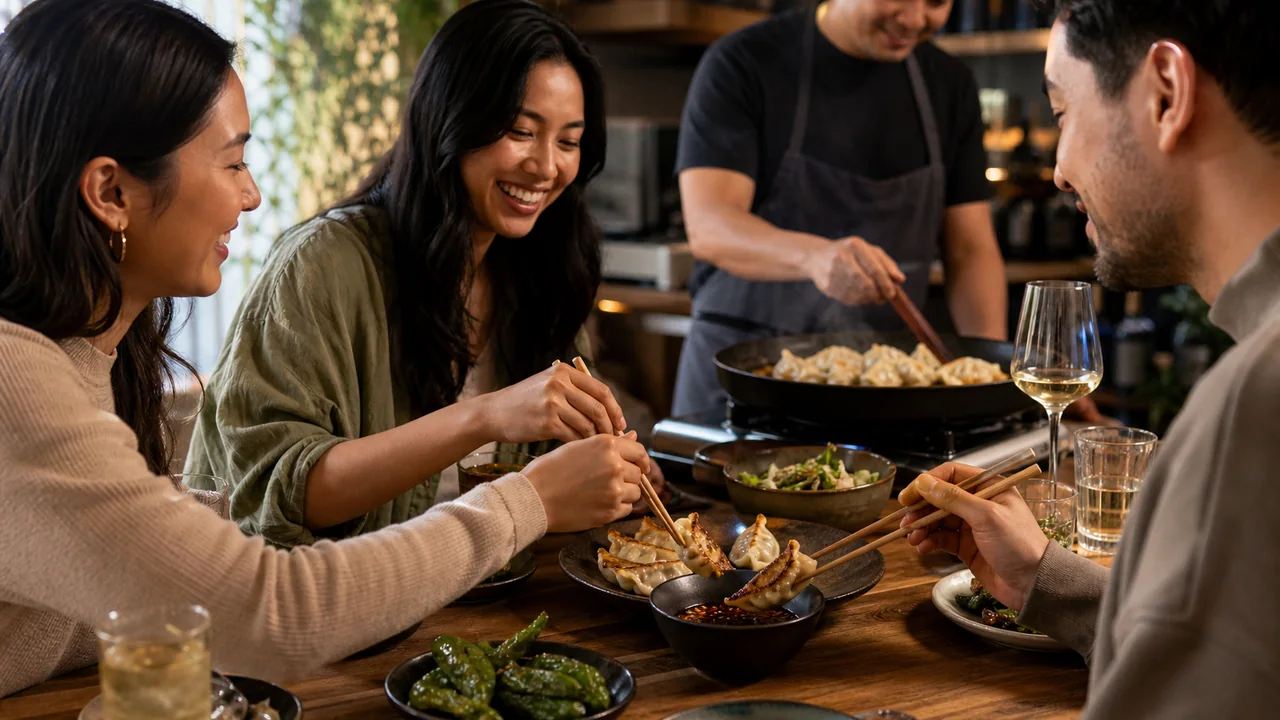
A snackable dumpling recipe with a Thai-style smoky tamarind dipping sauce built from Siam Crisp. The goal is not to make a complicated restaurant dish at home. The goal is to use one strong Thai pantry product, a few fresh ingredients, and a clear cooking sequence to create a plate that feels connected to Thailand while still fitting a normal weeknight kitchen.
Thai snacking culture loves contrast: crisp edges, sour-sweet dips, herbs, chili, and small bites made for sharing. That is the travel story behind the recipe: Thai food is memorable because it balances heat, freshness, savoriness, aroma, and texture. A spoonful of Siam Crisp helps bring that balance into a home kitchen without asking you to build every aromatic layer from scratch.
Ingredients
- 12 dumplings, fresh or frozen
- 1 tablespoon oil
- 3 tablespoons water
- 2 tablespoons Siam Crisp Smoky Tamarind
- 1 tablespoon lime juice
- 1 teaspoon soy sauce
- 1 teaspoon honey
- 1 teaspoon toasted sesame
- Mint, cilantro, or Thai basil
Method
- Pan-fry dumplings in oil until the bottoms turn golden.
- Add water, cover, and steam until cooked through.
- Uncover and crisp the bottoms again.
- Mix Siam Crisp with lime juice, soy sauce, honey, and sesame.
- Serve dumplings with herbs and the smoky tamarind chili sauce.
Why Siam Crisp belongs in this recipe
Siam Crisp Smoky Tamarind turns a simple dumpling plate into a Thai-inspired appetizer with tang, roasted heat, and crunch. This is what separates a generic chili oil recipe from a Thai crispy chili recipe: the condiment is not only a source of spice. It gives the dish fried garlic, shallot, roasted chili, aromatic oil, and a crisp texture that can be seen and felt.
That texture is especially important for smoky tamarind dumplings with crispy chili sauce. Soft rice, noodles, eggs, seafood, vegetables, or grilled chicken all need contrast. When the crispy chili is added after cooking, the warm oil perfumes the dish while the crunchy pieces stay distinct on top.
The Thailand flavor story
Thailand is one of the world's great eating destinations because everyday food can be simple and deeply layered at the same time. A street stall rice plate, a coastal seafood salad, or a Northern noodle bowl often relies on the same logic: hot food, fresh herbs, lime, chili, and a small detail that makes each bite feel alive.
This recipe is designed to promote that feeling. It does not claim to replace a trip to Bangkok, Chiang Mai, Phuket, or a Thai night market. Instead, it gives home cooks a practical way to bring a little of that Thai table energy into a meal they can make today.
Ingredient notes and substitutions
Use the best base ingredient you can find. Jasmine rice should smell gently floral, noodles should stay springy, herbs should be fresh, and seafood or chicken should be cooked only as long as needed. Siam Crisp is flavorful, but it works best when the food underneath it is treated with care.
If you do not have every Thai ingredient, keep the structure rather than chasing perfection. Lime can provide brightness, cucumber can provide freshness, soy sauce can replace fish sauce, and basil or cilantro can bring herbal lift. The one thing to protect is the final spoon of crispy chili, because that is where the recipe gets its signature aroma and crunch.
How to serve it beautifully
Serve the dish while the base is hot and the garnish is fresh. Put Siam Crisp on top in a visible spoonful rather than stirring it completely through the dish. This makes the plate look more appetizing, gives the first bite a strong aromatic signal, and lets each person mix the condiment in at the table.
For a Thailand-inspired spread, add one cooling side and one bright side: cucumber, herbs, lime wedges, a small salad, or a clear soup. These small additions make the meal feel generous without making the recipe harder.
Make-ahead and restaurant use
Most of the prep can happen early. Cook rice, wash herbs, mix a simple dressing, or portion noodles before service. What should not happen early is the final crispy chili finish. Add Siam Crisp right before eating so the fried aromatics stay crisp and the oil smells fresh.
For cafes, hotels, and restaurants, this recipe can become a named menu upgrade. The product is easy for staff to explain: a Thai crispy chili finishing spoon that adds crunch, aroma, and heat. That clarity helps guests understand why the dish feels special.
Final takeaway
Use the sauce as a drizzle for a plated appetizer. Add warm water if you prefer a looser dip. The same sauce works with spring rolls and grilled mushrooms. Use those details as small quality checks. If the plate tastes heavy, add lime or herbs. If it tastes flat, add a little more Siam Crisp. If it tastes too hot, add rice, noodles, cucumber, or egg to bring the balance back.
The best version of this recipe should make Siam Crisp feel useful, not decorative. It should help the cook make a better meal faster, celebrate Thai flavor, and turn a familiar plate into something with more aroma, texture, and memory.