
Thailand is famous for spicy food, but Thai heat is not one single sensation. It can be dry and roasted, sour and fresh, fermented and salty, herbal and peppery, or clean and sharp. The most memorable spicy Thai dishes do not burn for the sake of burning. They use chili as part of a larger flavor system: rice, herbs, aromatics, fish sauce, lime, fermented ingredients, curry paste, toasted rice, and vegetables that help the heat make sense.
This guide looks at five of the spiciest Thai dishes that serious food lovers should know: gaeng tai pla, khua kling, pad phet pla duk, tom saep, and som tam poo pla ra. They come from different parts of Thailand and they do not all taste alike. Southern dishes tend to be dense, turmeric-rich, and uncompromising. Isan dishes often feel sour, herbal, fermented, and communal. Central-style spicy stir-fries can be glossy, aromatic, and wok-driven. Together, they show why Thai chili culture is so much deeper than a simple heat ranking.
Use this as a culinary map rather than a dare. If you are cooking these dishes at home, start with fewer chilies than a Thai market vendor might use, then build upward. If you are tasting them in Thailand, eat with rice or sticky rice, keep cooling vegetables close, and pay attention to the supporting flavors. The question is not only “how spicy is it?” The better question is “what does the chili reveal?”
Southern Thailand · Heat: Extreme
1. Gaeng Tai Pla แกงไตปลา
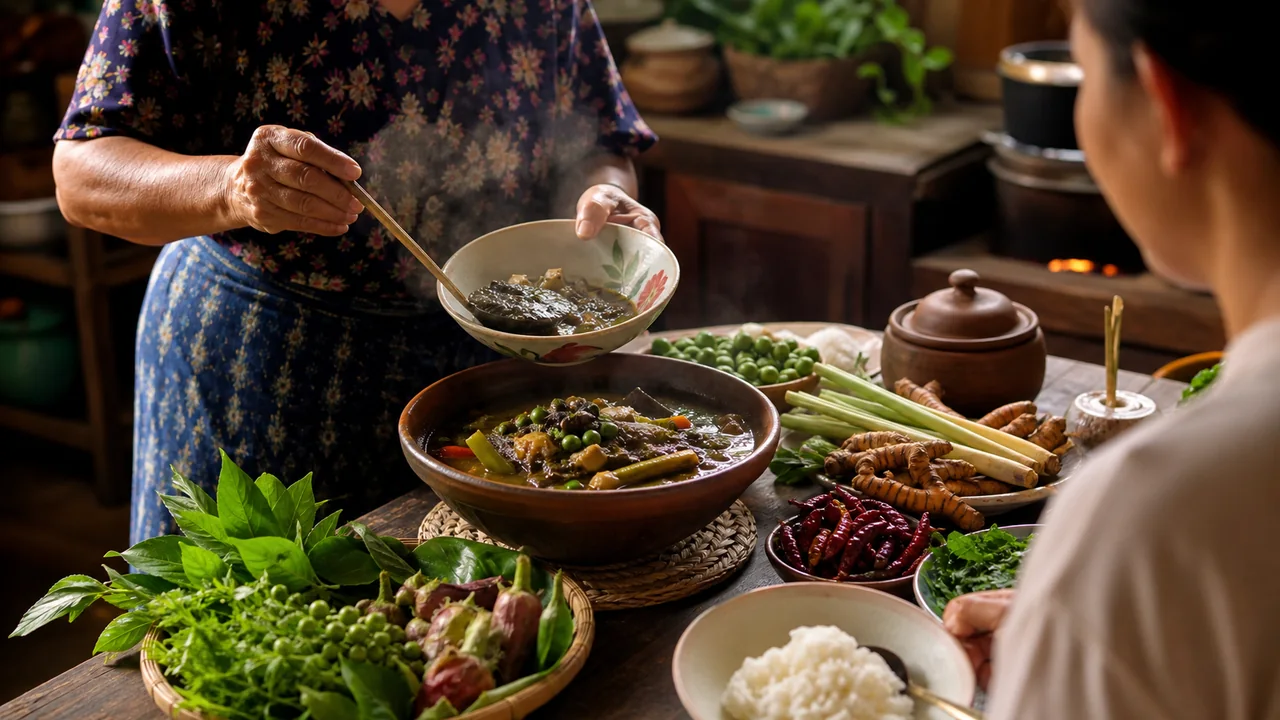
Gaeng tai pla comes from Southern Thailand, where strong preserved flavors, turmeric, seafood, and assertive chili heat define much of the regional table. The name refers to tai pla, a fermented fish product traditionally made from fish entrails or viscera preserved with salt. That detail can sound intimidating to newcomers, but it explains the dish's power: it was built in a coastal food culture where preservation, fishing, rice, and hard-working flavors mattered. In the South, curry is not only comfort food. It is a way to stretch preserved seafood, herbs, vegetables, and rice into something intensely satisfying.
Flavor and heat
The first impression is not gentle. Gaeng tai pla is salty, bitter-edged, herbal, earthy, and very hot. Turmeric gives the broth a deep golden tone, lemongrass and makrut lime leaf lift the aroma, and the fermented fish base creates a dark savory pressure that lingers. The best versions are not simply punishing. They are complex: fiery chili, briny depth, firm vegetables, and a dry rice pairing that makes each spoonful feel deliberate. It is one of the clearest examples of Thai heat as structure rather than decoration.
How it is cooked
To make a home version, simmer prepared tai pla sauce with water until the aroma rounds out, then add a curry paste made from dried chilies, fresh bird's eye chilies, garlic, shallot, lemongrass, galangal, turmeric, pepper, and shrimp paste. Add grilled fish or dried fish, then vegetables such as bamboo shoots, eggplant, long beans, pumpkin, or winged beans. Simmer until the vegetables are tender but not dull. Serve in small portions with jasmine rice, raw cucumber, herbs, and extra vegetables. Because the dish is salty and concentrated, the rice is not optional; it is part of the balance.
Key ingredients
- fermented fish viscera or prepared tai pla sauce
- dried fish or grilled fish
- turmeric
- lemongrass
- galangal
- makrut lime leaf
- bird's eye chilies
- bamboo shoots
- eggplant
- long beans
How to serve it
Taste cautiously, especially if the paste uses many bird's eye chilies. A spoon of Siam Crisp beside the rice can echo the fried aromatic side of Thai chili culture, but the curry itself already carries serious fire.
Southern Thailand · Heat: Extreme
2. Khua Kling คั่วกลิ้ง
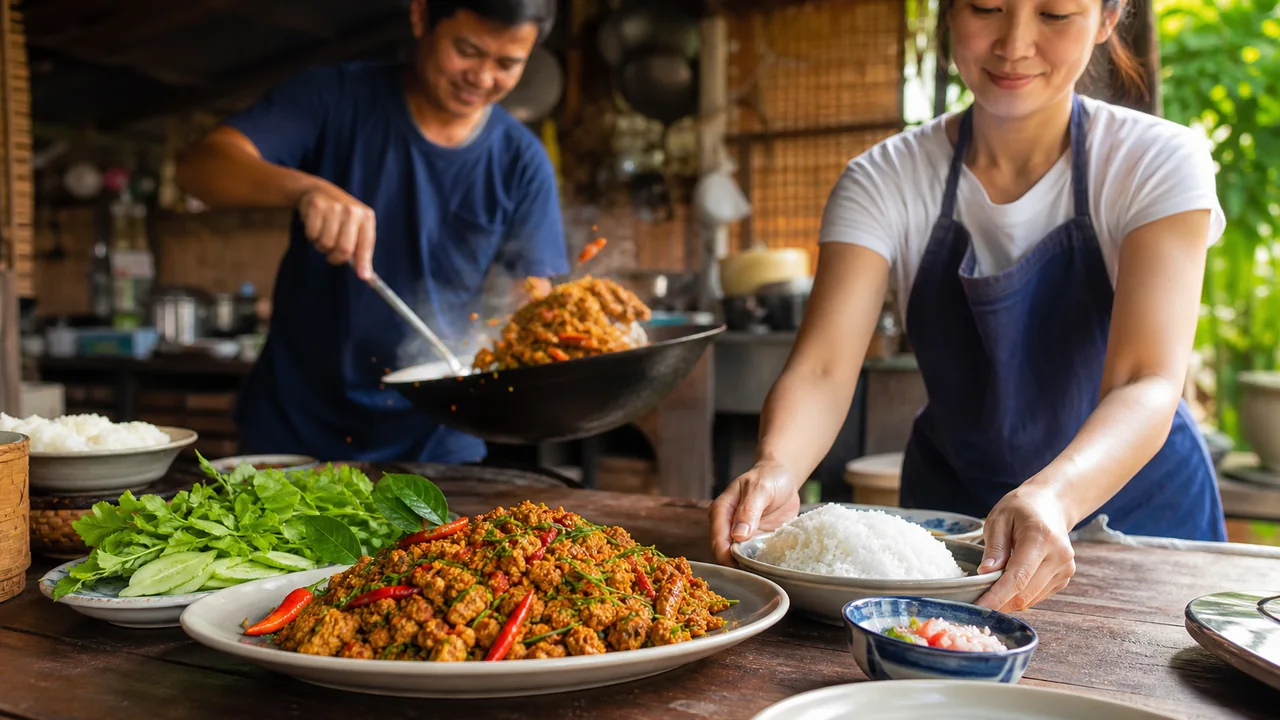
Khua kling is another Southern Thai dish that proves heat does not need a lot of liquid. It is a dry curry stir-fry, usually made with minced meat and a powerful paste, cooked until the fat, herbs, and spices cling tightly to every crumb. The dish is associated with the South's appetite for turmeric, peppery herbs, and chilies that speak loudly. Unlike a coconut curry, khua kling does not soften itself with creaminess. It is direct, dry, aromatic, and built to be eaten with plenty of rice and cooling vegetables.
Flavor and heat
A good khua kling tastes toasted before it tastes hot. The paste fries into the meat, so the flavor is concentrated: roasted chili, turmeric warmth, lemongrass, galangal, garlic, shallot, and the citrus edge of finely sliced makrut lime leaf. The texture is crumbly and almost granular, which makes the heat travel quickly across the tongue. It can be one of the hottest dishes on a Thai table because there is no broth to dilute the paste. Every bite is seasoned all the way through.
How it is cooked
Start by pounding or blending a paste of dried red chilies, fresh chilies, garlic, shallot, lemongrass, galangal, turmeric, peppercorns, salt, and a little shrimp paste. Fry the paste in a lightly oiled wok until fragrant. Add minced meat and stir constantly, breaking it into fine pieces. Cook until the mixture becomes dry and the oil begins to separate slightly. Season with fish sauce only after tasting, because the paste may already be salty. Finish with very thin strips of makrut lime leaf and serve with rice, cucumber, long beans, cabbage, and herbs.
Key ingredients
- minced pork, beef, chicken, or fish
- Southern curry paste
- turmeric
- lemongrass
- galangal
- makrut lime leaf
- bird's eye chilies
- garlic
- shallot
- fish sauce
How to serve it
Khua kling rewards restraint. A small mound can season a large plate of rice. If the heat becomes too intense, add cucumber, cabbage, or a plain egg rather than more sauce.
Central and regional Thai kitchens · Heat: Very high
3. Pad Phet Pla Duk ผัดเผ็ดปลาดุก
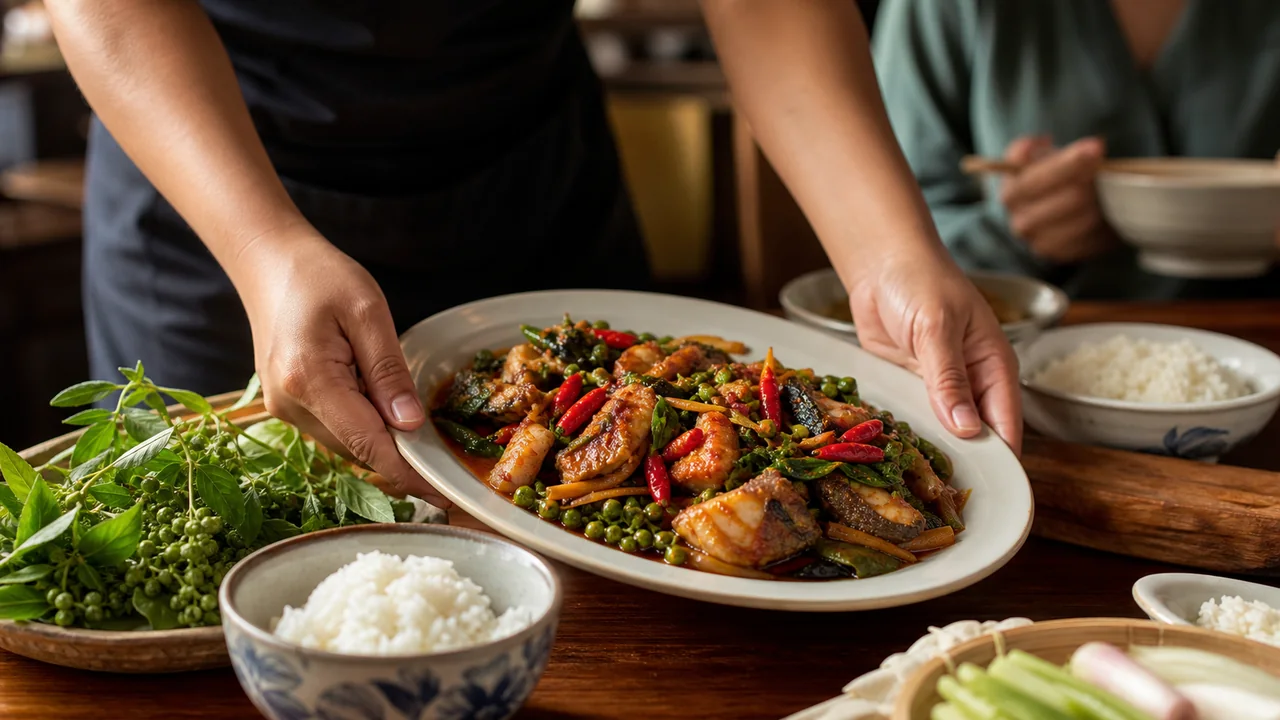
Pad phet means spicy stir-fry, and pla duk is catfish. Together they form a dish that sits between curry and wok cooking: red curry paste is fried hard, aromatics are added, and the fish is tossed until coated in a glossy, fiery sauce. Catfish is popular because its strong flavor stands up to chilies, herbs, and curry paste. In Thailand, versions can be made with fresh catfish, fried catfish, wild herbs, green peppercorns, or krachai, also called fingerroot, which gives the dish a distinctive medicinal perfume.
Flavor and heat
The flavor is sharp, herbal, and red-curry rich. It is not as fermented as gaeng tai pla and not as dry as khua kling, but it can be extremely spicy because the curry paste is concentrated in the wok. Krachai brings a peppery, almost camphor-like note. Green peppercorns pop with fresh heat. Basil gives a final herbal sweetness. The fish brings body, and if it is fried first, the edges stay crisp under the sauce. This is a dish for people who like heat with texture and fragrance.
How it is cooked
Use catfish steaks, fillets, or fried catfish pieces. Fry red curry paste in oil until it darkens and smells roasted. Add sliced krachai, green peppercorns, torn makrut lime leaves, and fresh red chilies. Add the fish and toss gently so it does not break apart. Season with fish sauce and a small touch of palm sugar to round the curry paste. Add basil at the end and remove from the heat as soon as the leaves wilt. Serve immediately with jasmine rice and a fresh vegetable plate.
Key ingredients
- catfish
- red curry paste
- krachai or fingerroot
- green peppercorns
- Thai basil or holy basil
- makrut lime leaf
- fresh red chilies
- fish sauce
- palm sugar
How to serve it
The heat is easier to manage when the dish is eaten with rice and something crisp, such as cucumber or raw cabbage. A crunchy chili condiment works best beside the plate, not mixed into the wok.
Isan, Northeastern Thailand · Heat: High
4. Tom Saep ต้มแซ่บ
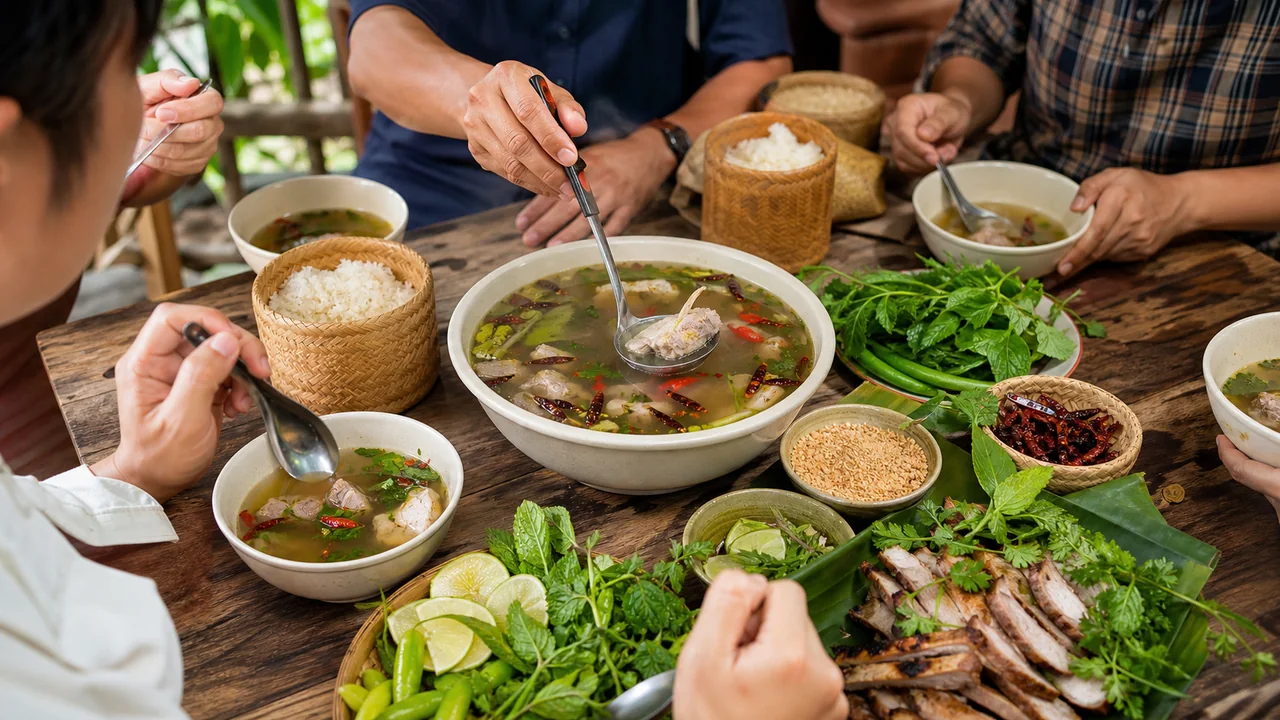
Tom saep is the Isan answer to people who think soup must be gentle. The word saep suggests deliciousness in the Northeastern Thai and Lao food world, but it also implies a sharp, lively intensity. The soup is usually clear rather than creamy, built from meat, bones, herbs, lime, fish sauce, chilies, and toasted rice powder. It belongs to the same eating culture as sticky rice, grilled meats, larb, and som tam: food designed for sharing, dipping, tearing, and balancing heat with herbs.
Flavor and heat
Tom saep is hot, sour, herbal, and smoky if dried chilies are toasted before being crushed into the bowl. Unlike tom yum, it often feels more rustic and direct. Toasted rice powder gives a nutty aroma and a faint texture. Lime hits quickly, fish sauce gives savory depth, and herbs make the broth feel fresh even when the chili level is high. The best bowls have a clean broth, not a heavy curry texture. The heat floats through the soup and then lingers with the sourness.
How it is cooked
Simmer pork ribs, beef, chicken, or mushrooms with lemongrass, galangal, and makrut lime leaf until the broth is flavorful. Season with fish sauce, then turn off the heat before adding lime juice so the sourness stays bright. Crush toasted dried chilies and add them to taste, along with fresh chilies if you want more fire. Add toasted rice powder, sawtooth coriander, mint, and scallions at the end. Serve with sticky rice, grilled meat, and raw vegetables.
Key ingredients
- pork ribs, beef, chicken, or mushrooms
- lemongrass
- galangal
- makrut lime leaf
- lime juice
- fish sauce
- toasted rice powder
- dried chilies
- fresh chilies
- sawtooth coriander
- mint
How to serve it
The dish should be adjusted at the table. Some people want more lime, others more dried chili. That flexibility is part of the pleasure, and it makes tom saep a perfect communal spicy dish.
Isan, Northeastern Thailand · Heat: Very high
5. Som Tam Poo Pla Ra ส้มตำปูปลาร้า
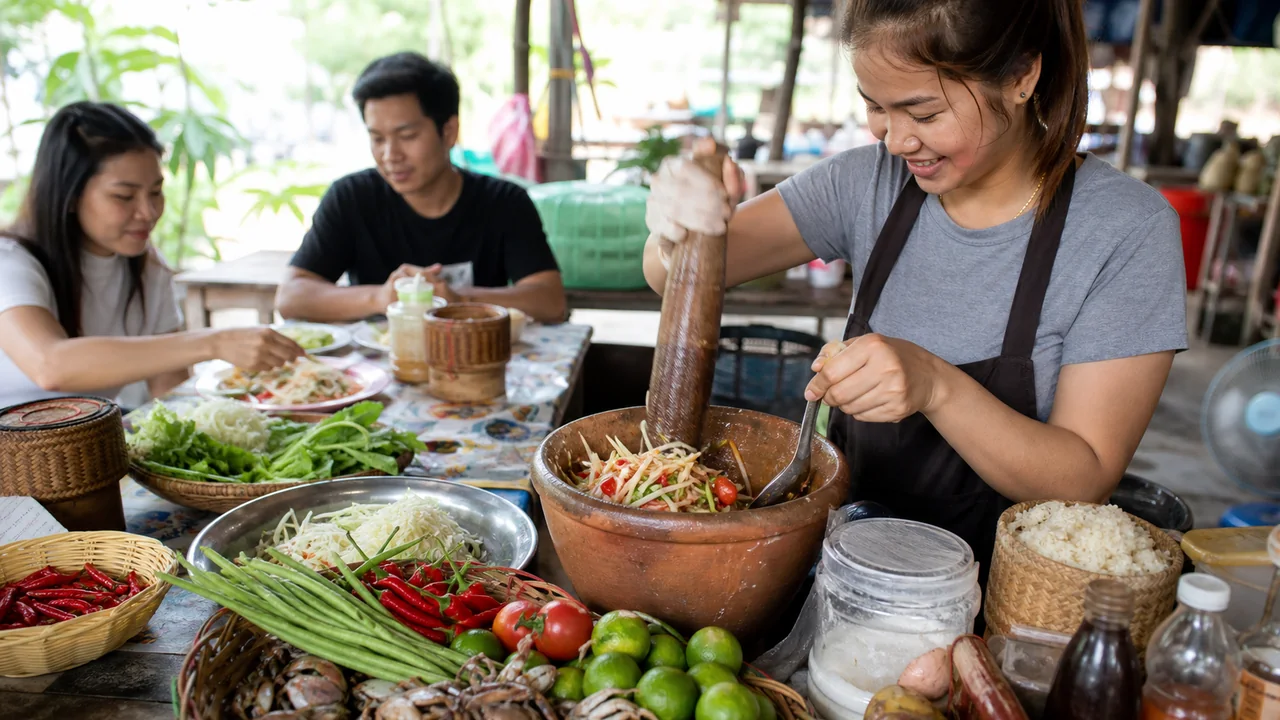
Som tam is famous around the world, but som tam poo pla ra is one of its boldest forms. It is tied strongly to Isan and Lao-influenced eating, where green papaya, fermented fish sauce, salted crab, chilies, lime, and sticky rice create a dish that is crunchy, funky, sour, salty, and hot. The mortar is central to the identity of the dish. Ingredients are not simply mixed; they are bruised, cracked, and pressed together so the dressing enters the papaya and the aromatics release their perfume.
Flavor and heat
This is not a polite salad. It is crunchy, sour, salty, fermented, and often fiercely spicy. Pla ra gives a deep aroma that can be challenging for beginners and beloved by people who grew up with the flavor. Salted crab adds briny complexity. Lime keeps the dish moving, tomatoes add juiciness, and long beans bring snap. The chilies are usually pounded directly into the dressing, so the heat is immediate. Som tam poo pla ra is refreshing and intense at the same time.
How it is cooked
Pound garlic and fresh chilies in a clay mortar. Add long beans and bruise them lightly. Add lime juice, fish sauce, pla ra, a little palm sugar, tomatoes, and salted crab pieces, then pound and stir until the dressing tastes balanced. Add shredded green papaya and toss by lifting and pressing with the pestle and spoon. The papaya should soften slightly but remain crisp. Serve immediately with sticky rice, cabbage, cucumber, herbs, and grilled chicken or pork if desired.
Key ingredients
- green papaya
- fresh chilies
- garlic
- lime
- fish sauce
- pla ra fermented fish sauce
- salted crab
- tomatoes
- long beans
- palm sugar
- sticky rice
How to serve it
Som tam is best eaten fresh because the papaya releases water as it sits. For people new to pla ra, start with a lighter amount and increase slowly. The heat can be adjusted, but the fermented depth is the heart of the dish.
Why these dishes feel hotter than ordinary spicy food
These dishes are intense because the chili is carried by different vehicles. In khua kling, a dry curry paste coats minced meat, so there is almost no liquid to soften the burn. In gaeng tai pla, fermented fish, turmeric, herbs, and chilies create a broth that tastes concentrated before it even tastes hot. In som tam poo pla ra, raw chilies are pounded directly into lime, fermented fish sauce, and papaya, so the heat feels immediate and bright. Tom saep lets chili travel through a sour broth, while pad phet pla duk fries curry paste until the oil and aromatics cling to the fish.
That is why a simple list of chili counts misses the point. Thai heat depends on texture, fat, acidity, salt, temperature, and what you eat beside the dish. A spoonful of curry with rice may feel manageable; the same spoonful alone may feel overwhelming. A papaya salad with sticky rice may feel refreshing; without sticky rice it can feel brutally sharp. Balance is not an optional decoration in Thai food. It is the reason the heat becomes delicious.
How to taste very spicy Thai food without losing the plot
Start with aroma. Smell the herbs, curry paste, fermented notes, lime, roasted chilies, or toasted rice before judging the fire. Then take a small bite with rice or vegetables, not alone. Let the dish show its structure: salty first, sour first, smoky first, herbal first, or roasted first. After that, decide whether you want more chili. This approach makes the meal more enjoyable and more respectful to the cook.
Cooling sides matter. Cucumber, cabbage, Thai basil, long beans, fresh herbs, plain omelet, rice, sticky rice, and broth are not signs of weakness. They are part of the table. They reset the mouth and make the next bite possible. The most experienced spicy-food eaters are often the ones who use the sides best.
Where Siam Crisp fits into this story
Siam Crisp is not trying to replace these regional dishes. A jar of Thai crispy chili is a different tool: a finishing condiment that brings fried garlic, shallot, chili, aromatic oil, and crunch to everyday food. But the same Thai logic applies. Chili should not be flat. It should have aroma, texture, savory depth, and a clear role on the plate.
If these five dishes teach one lesson, it is that Thai heat works best when it is connected to food. The chili belongs to rice, herbs, broth, fish, papaya, grilled meat, and vegetables. It belongs to the table, not just the tongue. That is the idea behind using Siam Crisp well: add heat in a way that makes the whole dish more complete.
Final takeaway
The spiciest Thai dishes are not only tests of endurance. They are regional stories. Gaeng tai pla speaks of the Southern coast, preservation, turmeric, and uncompromising curry. Khua kling shows how dry curry paste can become a concentrated aromatic force. Pad phet pla duk proves that wok-fried curry paste and herbs can make fish taste powerful. Tom saep captures the sour, herbal, communal energy of Isan. Som tam poo pla ra turns a mortar, green papaya, fermented fish, crab, lime, and chilies into one of the world's most vivid salads.
Try them with curiosity, respect, and enough rice. The reward is not only heat. The reward is understanding how Thai cooks use chili to build memory, appetite, and balance.