
Thailand's Vegetarian Festival is one of the clearest moments when a pantry detail matters as much as a recipe. The official Tourism Authority of Thailand event listing places the 2026 Phuket Vegetarian Festival from 10 to 18 October, and local Phuket guides note that opening and closing ceremonies can extend the practical festival window around those nine ritual days. For cooks and hospitality teams, that means a familiar question arrives early: what belongs on a festival-season table, and what should stay clearly outside strict jay service?
Crispy chili needs that careful answer. It can be a beautiful finish for rice, tofu, noodles, mushrooms, greens and market snacks, but many Thai chili condiments are built from aromatics that strict jay observers avoid. This guide keeps the promise useful and honest: understand what jay food requires, check every label, separate strict and non-strict service, and use crispy chili where it genuinely fits.
What jay season changes for a crispy chili table
In everyday English, people often use vegetarian, vegan and plant-based as if they mean the same thing. During Thai Vegetarian Festival season, that shortcut can create mistakes. Jay food is stricter than ordinary vegetarian eating. Phuket 101's 2026 festival guide explains that jay excludes meat, dairy, eggs and alcohol, and also avoids the five pungent vegetables: garlic, onion, shallot, chives and leek. That last group is the key issue for crispy chili.
A classic crispy chili can look plant-forward and still be wrong for strict jay service. Fried garlic, fried shallot, onion powder, shrimp seasoning, fish sauce, oyster sauce, chicken powder, dairy derivatives and shared cooking oil can all change the answer. The useful habit is simple: do not judge by appearance, color or the word vegetarian alone. Read the ingredient panel, ask the maker when needed and keep a written answer for restaurant staff.
For Siam Crisp readers, this does not make crispy chili irrelevant. It gives the condiment a clearer role. If a jar is not confirmed jay-compliant, serve it for non-strict vegetarian plates, flexitarian meals, staff meals, retail tastings outside the festival fast or ordinary plant-forward cooking. If the meal is for observant jay guests, choose a product made and labeled for that standard.
The difference guests actually need to know
A menu can say this plainly without sounding apologetic: jay dishes are prepared without animal ingredients and pungent alliums; other vegetarian dishes may include garlic, shallot or onion. That one sentence prevents confusion before a guest reaches for the condiment spoon.
Sources: Tourism Authority of Thailand, Phuket 101
Build two service lanes, not one vague condiment station
The safest hospitality setup is not a crowded table of sauces. It is two clearly separated service lanes. The strict jay lane should use clean utensils, a clean tray and only verified jay condiments. The non-strict vegetarian lane can hold crispy chili with garlic or shallot, roasted chili flakes, lime, herbs and other everyday Thai pantry finishes. Separation protects the guest, and it also protects the brand from a claim it cannot prove.
This matters because the festival is public, busy and food-focused. Phuket 101 describes yellow flags, shrine areas and large runs of food stalls around Phuket Town during the festival. In that environment, quick visual cues help, but they do not replace ingredient control. For restaurants and hotels, the best cue is an operations note behind the counter: which items are jay, which are vegetarian but not jay, and which are ordinary menu items.
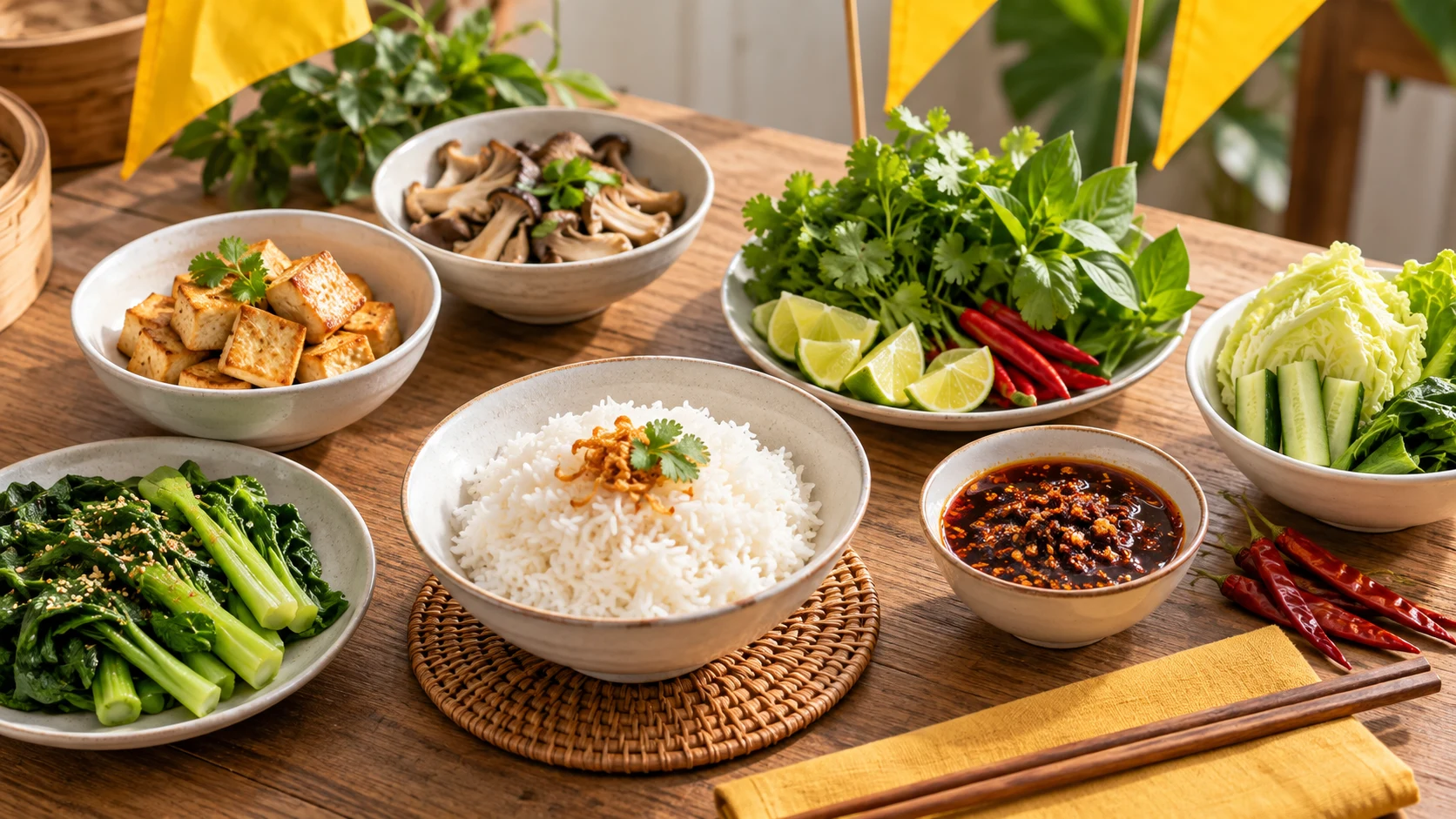
Home cooks can use the same logic on a smaller table. Put steamed rice, rice noodles, tofu, mushrooms, greens, cucumber, herbs and lime in the center. Place any verified jay condiment with its own spoon. Keep everyday crispy chili in a separate bowl with a small verbal note: good for plant-forward meals, not for strict jay observance unless the current label confirms it.
Cross-contact is part of the pantry story
Separate utensils are not only a professional kitchen issue. A spoon that moves from garlic-shallot crispy chili into a jay sauce has changed the sauce. This is why clean ramekins and small refills are better than large communal jars.
Sources: Thailand Foundation, Phuket 101
Where crispy chili still belongs in festival-season cooking
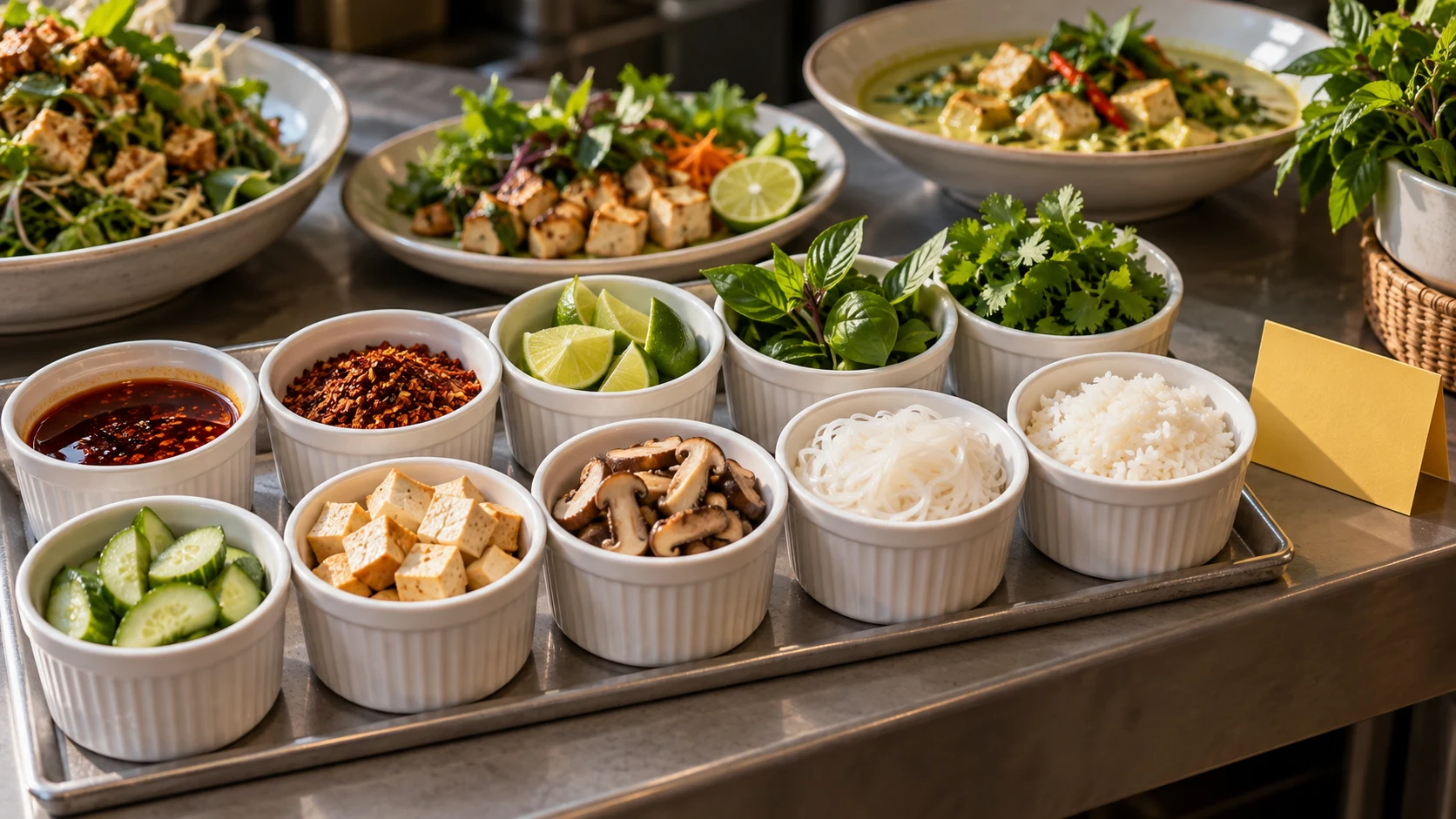
A cautious guide should not turn into a ban. Crispy chili is still useful for many guests who are eating lighter, choosing tofu, adding more vegetables or building a Thai-inspired pantry board without observing the full jay fast. The honest phrase is plant-forward, not jay, unless the product is made for jay rules.
Think about textures first. Tofu, mushrooms, rice noodles, steamed rice and blanched greens are soft, absorbent foods. A small spoon of crispy chili at the end adds gloss, roasted heat and crunch without asking the cook to fry aromatics from scratch. It works especially well when the plate also has lime, herbs and cucumber, because those fresh elements keep the oil from feeling heavy.
For a retailer or gift buyer, this is a good moment to explain use cases instead of making a broad festival claim. A premium Thai crispy chili can sit in a vegetarian-friendly pantry gift for general cooks, but a strict jay hamper needs separate verification. That distinction is not a weakness. It signals that the seller understands Thai food culture and respects the guest.
A simple non-strict serving board
For non-strict plant-forward service, pair crispy chili with jasmine rice, grilled or pan-seared tofu, sauteed mushrooms, cucumber, steamed greens, lime and Thai basil. Serve the chili last, not stirred through everything, so each person controls heat and crunch.
Sources: Phuket 101
How to read a crispy chili label before you serve it
Start with the obvious words: garlic, shallot, onion, chive and leek. Then check animal-derived seasonings such as fish sauce, shrimp, oyster sauce, chicken powder, pork powder, milk or egg. If the product is imported or locally made in small batches, also check whether the label uses flavorings or seasoning blends that need clarification from the producer.
Next, look for the positive proof. A yellow label, a vegetarian-looking design or a plant image is not the same as a jay claim. For strict service, the label or supplier should state that the product is suitable for jay observance, and the kitchen should know whether utensils, oil and prep surfaces are separated. When the answer is incomplete, do not improvise. Move the item into the non-strict lane.
Finally, train the sentence staff can repeat. Good service language is short: this chili contains fried aromatics and is for non-strict vegetarian plates; our jay condiment is over here. Guests appreciate clarity more than persuasion. During a religious and cultural food period, precision feels more premium than over-selling.
The menu note that prevents most mistakes
Use terms consistently: jay means no animal ingredients and no pungent alliums; vegetarian may still include alliums; plant-forward means vegetable-led but not necessarily compliant with either standard.
Sources: Phuket 101
A practical menu plan for homes, cafes and hotels
For home cooks, the simplest plan is a rice-and-vegetable table. Steam jasmine rice, blanch greens, saute mushrooms, warm tofu and cut cucumber and lime. If everyone at the table is strict jay, use only verified jay condiments. If the table is mixed, set crispy chili apart and say exactly what it is.
For cafes, make one clear plant-forward special rather than several confusing ones. A tofu rice bowl with herbs, cucumber and lime can carry a non-strict crispy chili upsell, while a separate jay bowl uses verified sauces and separate utensils. The guest should not have to interrogate the cashier to understand the difference.
For hotels and premium retailers, the opportunity is education. A small card can explain how Thai Vegetarian Festival eating differs from everyday vegetarian dining, then recommend the right condiment lane. That is more useful than a generic seasonal display. It respects observant guests, and it gives curious food lovers a better way to enjoy Thai pantry culture.
Keep the internal path natural
After the festival period, the same setup becomes an everyday Thai crispy chili recipe board: rice, noodles, eggs if appropriate, tofu, vegetables and grilled foods, each finished at the table rather than hidden in the kitchen.
Sources: Tourism Authority of Thailand, Thailand Foundation, Phuket 101
What to remember
Thai Vegetarian Festival season is a good test of pantry honesty. Crispy chili can be delicious with tofu, rice, noodles and vegetables, but strict jay service asks a different question: is this product verified to avoid animal ingredients, pungent alliums and cross-contact? If the answer is not clear, do not blur it.
The best table is generous and precise. Give strict jay guests a clean, verified lane. Give plant-forward guests the crunch, aroma and heat they want. Label both clearly. That way, crispy chili supports Thai food culture instead of flattening it.
Frequently asked questions
Is crispy chili always suitable for Thai Vegetarian Festival food?
No. Many crispy chili condiments include garlic, shallot, onion or animal-derived seasonings. For strict jay service, use only products that are clearly verified for jay observance.
What is the difference between jay and vegetarian?
Jay is stricter than ordinary vegetarian eating. It avoids animal ingredients and also avoids pungent alliums such as garlic, onion, shallot, chives and leek.
Can I serve Siam Crisp during Vegetarian Festival season?
You can serve crispy chili for non-strict vegetarian or plant-forward plates when the ingredients fit your guests. Do not present any product as jay-compliant unless the current label or producer confirmation proves it.
What foods pair well with crispy chili on a plant-forward table?
Jasmine rice, rice noodles, tofu, mushrooms, cucumber, blanched greens, lime and Thai herbs all work well because they give crispy chili a simple base for heat, crunch and aroma.
Sources
- Phuket Vegetarian Festival 2026Tourism Authority of Thailand · 2026-09-19 · Official source
- Phuket Vegetarian FestivalThailand Foundation · 2022-09-26
- Phuket Vegetarian Festival 2026: October 10-18 SchedulePhuket 101 · 2026-08-12